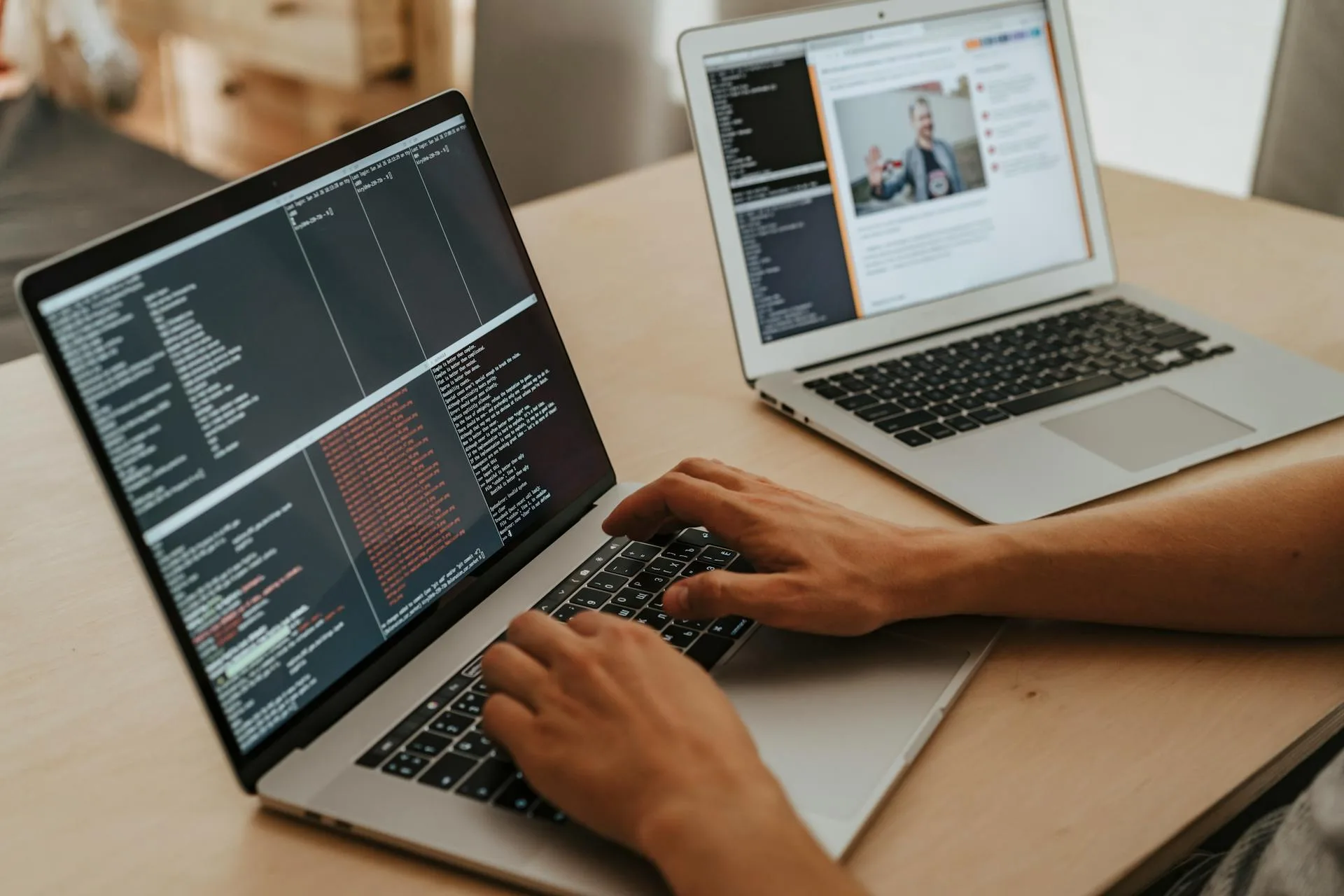
One of the clearest shifts in the 2026 toolchain is breaking AI out of a single chat surface into installable, reusable, composable Skills: Cursor Rules and MCP servers, Claude Agent Skills, and a flood of SKILL.md repos on GitHub. In parallel, the open-source project OpenHuman is riding a different but overlapping wave—local-first personal AI that writes Gmail, GitHub, and Notion activity into an on-device Memory Tree so a desktop agent can remember last week’s PRs and unanswered threads like a colleague, not a one-shot prompt.
This article is not “yet another chatbot review.” It explains why the Agent Skill inflection point and OpenHuman’s GitHub momentum are happening at the same time: engineers want more than a single answer—they want a long-running, auditable personal capability stack that can live in the Dock. If you already read our Move Over ChatGPT piece, this one leans into Skill ecosystems and how GitHub spreads local-first agents; for product depth and a five-day field test, see the digital twin guide and hands-on review.
The 2026 Agent Skill wave: from plugins to a personal capability OS
In engineering blogs, “Skill” often sounds like marketing for “skill packs.” In practice it means bundling prompts, tool calls, and permission boundaries into versioned modules. That is materially different from 2024’s “install a ChatGPT plugin” era. The 2026 Skill narrative carries three hard requirements:
- Composable — multiple Skills stack in one session or one agent runtime instead of living in mutually exclusive SaaS silos;
- Portable — rule files live in Git so teams can code-review “how AI should behave in our repo”;
- Auditable — engineers distrust black boxes; the hotter Skills get, the more they want to see which APIs were called and which files were written on a laptop or self-hosted host.
Coding agents such as Cursor and Claude Code anchor Skills inside the IDE and terminal. OpenHuman anchors them in a desktop shell, Memory Tree, and scheduled sync—its target user is not only writing code but coordinating mail, calendars, issues, and docs as a maintainer or indie developer. The inflection is not “who has the biggest Skill marketplace,” but whose agent can continuously consume personal context across days and tools.
That is why repositories full of SKILL.md templates feel less like novelty and more like infrastructure. A Skill that only fires when you remember to open a chat window is a demo; a Skill that re-hydrates context every morning from the systems you already live in is closer to an operating system primitive. The industry vocabulary moved from “plugins” to “Skills” because the unit of value shifted from one integration to one durable capability you can compose.
Same evolution chain as the code knowledge graph
Our code knowledge graph article argues that agents editing large repos need structured symbol graphs. The Skill wave tackles context outside the repo—customer email, release calendars, cross-repo issues. OpenHuman’s Memory Tree is an attempt to wire both worlds into one desktop entry point.
Why OpenHuman sits at the Skill trend and local-first crossroads
Treating OpenHuman as “a chat window with a mascot” misses why it spreads on GitHub. It passes three acceptance tests the Skill era implicitly demands:
(1) Integrations are Skills. The project advertises 118+ OAuth connectors (including GitHub, Gmail, Notion, Linear, and more). That is essentially a default personal Skill stack—connect a data source, pull on a schedule, compress into memory—rather than asking every user to hand-assemble ten MCP config files before anything works.
(2) Memory is forkable. The Memory Tree lives in local SQLite and exports Obsidian-compatible .md files. You can review what the agent remembered the way you review code, prune sensitive passages, or even version curated subsets in Git. That aligns with the “personal wiki” direction many developers already want, except the engine maintains it.
(3) Inference is layered. TokenJuice converts HTML to Markdown, deduplicates, and summarizes before context leaves the machine; sensitive subtasks can run on Ollama while heavier reasoning uses hosted routes. That is a pragmatic way to control token bills in a Skill-heavy workflow—not a bet on one flashy conversation.
None of this replaces IDE-native agents for typing and tests. It reframes OpenHuman as the layer that remembers what happened across SaaS boundaries while Cursor or Claude Code remembers what happened inside the repo. The intersection is exactly where GitHub attention concentrates: builders who already live in Skills but still lose thread when they switch apps.
| Layer | Typical IDE Skill (Cursor, etc.) | OpenHuman desktop stack |
|---|---|---|
| Primary arena | Current repo and terminal | Cross-SaaS personal workflows |
| Context store | Project Rules + session history | Memory Tree + local Markdown |
| Runtime shape | On-demand invocation | Scheduled sync + Dock presence |
| Coding agents | Native integration | Can share backend via agentmemory |
How offline personal AI spreads on GitHub: auditability is the product
“Sweeping GitHub” is not empty hype if you watch tinyhumansai/openhuman the way engineers watch early Homebrew or Obsidian: star velocity, forks for custom integrations, and issues debating privacy boundaries and self-hosting. GitHub users rarely adopt because a benchmark moved a few points. They adopt when:
- GNU license plus Rust core — you can read source, compile yourself, and audit supply chains in CI;
- Narrative is legible — “personal AI operating system” travels farther on tech Twitter and newsletters than “another GPT wrapper”;
- Pain is real — every SaaS ships its own Copilot that does not share memory; OpenHuman tries to unify a personal source of facts on the filesystem.
“Offline” here should be read as local-first: knowledge defaults to the device instead of vendor chat history. Account login, Composio OAuth, and some model routes may still hit the network—read the privacy and security docs before production use. Airplane-mode complete is the wrong mental model; inspectable, forkable, disk-resident is the right one.
That auditability story is why GitHub is the distribution channel, not just a download page. Stars function as a trust signal among developers who will clone, grep, and argue in issues before they trust an agent with inbox access. The project’s growth curve looks less like consumer app virality and more like infrastructure curiosity—the same audience that starred observability tools and local-first note apps now stars agents they can diff.
Skills, MCP, and 118+ OAuth: how to compose without bloat
A side effect of the Skill wave is integration sprawl: more connectors mean a larger permission surface and noisier memory. A practical stance is to treat OpenHuman as a personal orchestration layer, not “connect everything because it is listed.”
Minimal Skill set: start with Gmail, Google Calendar, and GitHub—or swap Notion for one of those—run two or three days until the Memory Tree has depth, then spot-check summaries in the Obsidian export directory.
Split work with coding agents: use Claude Code or Cursor for implementation and tests; ask OpenHuman each morning which PRs should merge first and which threads still need replies. The same division applies when comparing OpenHuman and OpenClaw: OpenClaw shines as a multi-channel gateway and CI orchestrator; OpenHuman optimizes for aggregating personal context.
MCP still matters in this picture—it is the lingua franca many IDE agents speak—but OpenHuman’s pitch is that most maintainers should not need to become MCP plumbers for baseline personal workflows. The 118+ OAuth integrations are the opinionated default Skill graph; you trim it to what you actually operate, then add bespoke MCP only where the defaults stop.
# Or download the DMG from tinyhumans.ai/openhuman
curl -fsSL https://raw.githubusercontent.com/tinyhumansai/openhuman/main/scripts/install.sh | bash

# config.toml: Ollama local models, agentmemory shared with coding agents
More Skills means slower OAuth grants
118+ integrations can read mail, edit documents, and call APIs. OpenHuman remains early beta: do not run unattended on production finance or compliance approvals. Connect least privilege and periodically purge tokens, customer names, and other sensitive fragments from the Memory Tree.
Mac deployment: landing the Skill story on real hardware
Personal AI at the Skill inflection point has a physical constraint: close the laptop lid and background sync stalls. If you want OpenHuman to behave like a 7×24 colleague that keeps pulling GitHub and mail, teams usually pick one of these patterns:
- Local dev machine — code in Cursor by day, keep OpenHuman in the Dock for cross-app context;
- Mac mini cloud host — static IP simplifies OAuth callbacks, VNC for first-time authorization, and when sharing a host with a cloud CI runner, reserve RAM for Ollama and sync processes;
- Memory audit habit — review the Obsidian directory the way you review team Skill files: what did the agent retain, and what should be deleted.
Apple Silicon remains friendly to Ollama and MLX on-device inference. OpenHuman is not primarily a model-picker; it is a bet that Skill-era capabilities collapse into forkable local memory—and Mac is still the smoothest hardware path for that loop. When uptime matters more than portability, a dedicated cloud Mac keeps sync alive while your daily driver sleeps.
Jump in or wait?
If you only need occasional Q&A, any web chat is enough. If you already maintain stacks of SKILL.md files, MCP configs, and team Rules—but hate that every SaaS Copilot forgets what the others know—local-first personal AI deserves a Dock icon. OpenHuman’s GitHub heat is the overlap of the Skill wave and local-first demand, not a random marketing spike.
The next competitive turn will not be “whose Skill store is bigger,” but whose agent understands your repos, calendar, and release cadence. Standing at the inflection point, the win is not installing more plugins—it is making personal context composable, auditable, and long-running. OpenHuman’s open desktop shell is a direct wager on that path.
- Source — github.com/tinyhumansai/openhuman
- Docs — OpenHuman GitBook
- Further reading — offline personal AI vs ChatGPT · digital twin deep dive
ZavCloud · Cloud Mac
Want your personal Skill stack running 7×24 on macOS?
Dedicated Mac mini M4 instances: native macOS, static IPv4, 1 Gbps egress—ideal for OpenHuman to keep syncing GitHub and mail context while your daily Mac focuses on IDE work.
View plans and pricing